

Kinesiology Taping
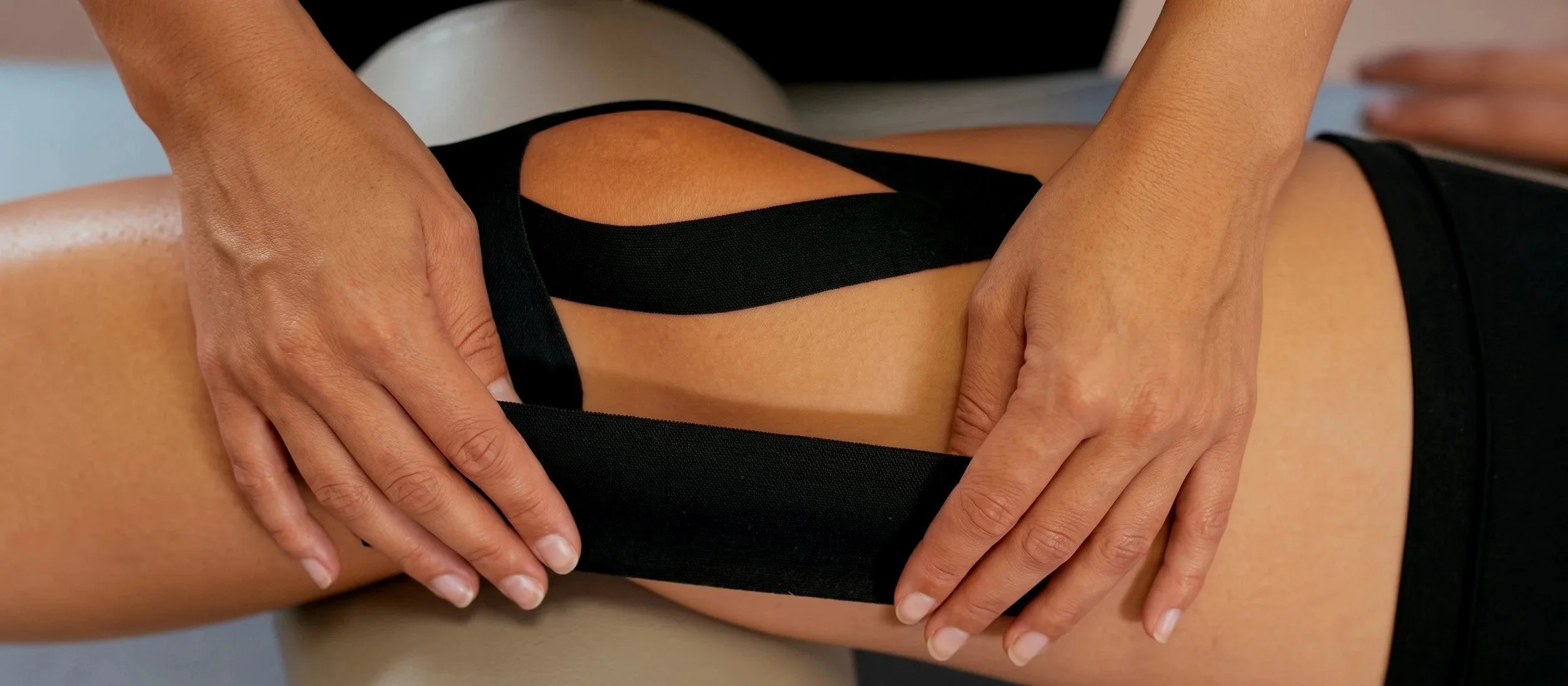
Kinesiology tape (often called K-tape or KT tape) is a thin, elastic, cotton-and-nylon blend adhesive tape designed to mimic the weight and stretch of human skin. Unlike rigid traditional athletic tape, which locks joints down and limits movement, kinesiology tape stretches up to 60% beyond its resting length to allow a full range of motion while providing dynamic support.
How It Works
Micro-Lifting of Skin: Applied with specific tension, the elastic recoil creates tiny folds (convolutions) in the skin. This microscopic lifting increases sub-dermal space, reducing pressure on underlying nerve endings, blood vessels, and lymphatic pathways.
Pain Decompression: By lifting the skin away from sub-cutaneous nociceptors (pain receptors), the tape dampens pain signals traveling to the brain.
Lymphatic Drainage & Swelling: The created space allows lymphatic fluid to drain more freely, accelerating the removal of cellular waste, inflammation, and bruising.
Sensory Feedback (Proprioception): The continuous tactile sensation on the skin heightens body awareness, sending real-time feedback to the brain to adjust movement patterns, posture, and joint stability.
Professional-Grade Care in the Comfort of Home
We bring kinesiology taping right to your door as a standalone treatment or integrated directly into your personalized Physical Therapy plan.

"Dynamic stabilization that moves when you move."
Common Conditions Treated
Golfer’s elbow
Achilles tendinitis
Patellofemoral pain syndrome
Patellar tendinitis
Tennis elbow
Rotator cuff impingement/ tendinitis
Low back pain
Hip bursitis
Whiplash
Plantar fasciitis
Postural dysfunction
IT band syndrome
Piriformis syndrome
Muscle imbalances
Scapular winging
Hypotonia / Muscle Weakness
Hypertonia / Muscle Spasticity
Ankle Sprains
Hamstring Pulls
Delayed Onset Muscle Soreness (DOMS)
Lower back pain
Upper back or Neck Pain
Tension Headaches
Postural Imbalances
Post-surgical swelling (i.e. knee replacement, ACL reconstruction)
Pediatric Conditions (i.e. Knee hyperextension)
Stroke & Hemiplegia (Shoulder Subluxation, Drop foot)
Carpal Tunnel Syndrome
De Quervain’s Tenosynovitis
Sacroiliac (SI) Joint Dysfunction
Pregnancy-Related Musculoskeletal Strain
Plantar Fasciitis
Shin Splints (Medial Tibial Stress Syndrome)
And More!
Book Now
"Kinesiology tape doesn't restrict movement—it facilitates it. By lifting the skin, it changes the sensory input to the brain, alleviating pain and allowing the body to heal dynamically while staying active."
— Dr. Kenzo Kase (Creator of Kinesio Taping)